

A good relationship with your in-laws is built slowly through everyday respect, honest communication, sensible boundaries and a lot of patience on both sides. It rarely happens in the first month, and it does not require you to become someone you are not. When the couple works as a team and both families feel valued, most early awkwardness settles into real warmth.
This guide is written for new brides and grooms, and also for parents-in-law who want the new member of the family to feel at home.
Understand that everyone is adjusting
After the wedding, it is easy to feel that you are the only one adjusting. A new bride may be moving into a different house, city or kitchen. A groom may suddenly have a second set of parents with their own expectations. But your in-laws are adjusting too. A mother may be learning to share her son's time and attention. A father may not know how formal or informal to be with his daughter-in-law.
Seeing it this way helps. Small irritations, a comment about cooking, a question about when you are coming home, are often clumsy attempts to connect rather than criticism. Give people the benefit of the doubt in the early months.
If you have not met your in-laws often before the wedding, our tips on impressing your future in-laws at the first meeting still apply long after the first visit: punctuality, warmth and genuine interest go a long way.

Show respect in everyday ways
Respect in most Indian families is shown less through big gestures and more through small, regular habits:
- Greet them properly. Touching feet on occasions where it is customary, a namaste, or simply a warm "good morning" sets the tone of the day.
- Learn family customs. Every household has its own way of doing puja, festivals and fasts. In Goswami and Dashnami families, traditions around Shiva worship, family deities or particular vrats may differ from what you grew up with. Ask with curiosity rather than comparing.
- Remember what matters to them. Birthdays, anniversaries, a favourite sweet, a health condition. Asking about a doctor's appointment shows care.
- Involve them in decisions where it makes sense. Asking for their opinion on a festival plan or a home purchase, even if the final decision is yours as a couple, makes them feel included.
- Speak kindly about them, including to your own parents. Complaining about in-laws to relatives or on WhatsApp groups tends to travel back.
Set boundaries without creating conflict
Respect does not mean having no say in your own life. Healthy boundaries actually make relationships easier, because everyone knows what to expect. The key is to set them gently and early, and as a couple.
Decide together first
Before raising any boundary with either family, the husband and wife should agree between themselves. For example, how often you will visit each set of parents, how much privacy you need, how money will be handled, or whether you plan to work after marriage.
Let each partner speak to their own parents
A useful rule many couples follow: the son talks to his parents, the daughter talks to hers. A mother is more likely to accept "we have decided to spend Sunday with Riya's family this week" from her own son than from her daughter-in-law. This protects the new member of the family from being seen as the cause of change.
Keep the tone respectful
Boundaries work best when expressed as plans, not accusations. "We would like to have dinner by ourselves on Friday evenings" lands better than "You never give us space."
Living arrangements shape many of these questions. Our article on joint family vs nuclear family explores the trade-offs, and adjusting to married life covers the wider first-year changes.
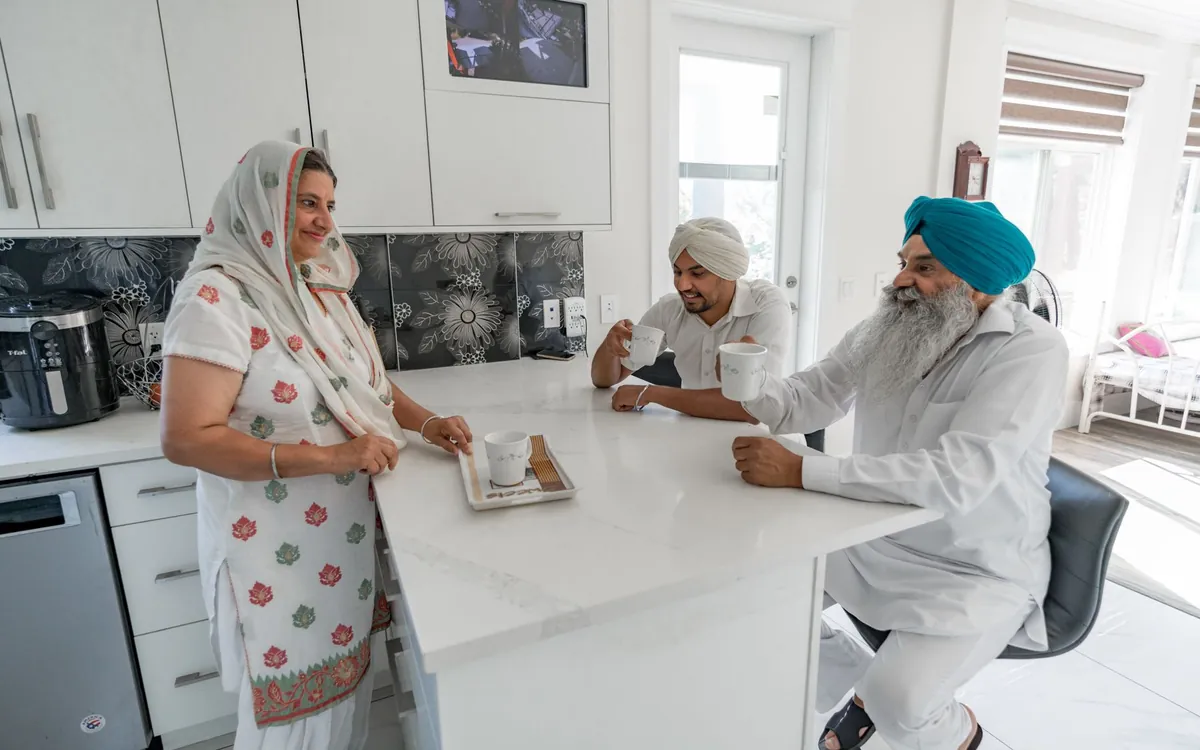
Communicate openly and early
Most in-law tensions grow from things left unsaid. A daughter-in-law quietly resents an expectation, or a mother-in-law silently feels ignored, and months later it comes out as a big argument.
A few habits help:
- Raise small things while they are small. A calm word today is far easier than a row in three months.
- Ask instead of assuming. "Would you like me to help with the cooking on Sundays, or do you prefer to do it yourself?" avoids guesswork on both sides.
- Spend time without an agenda. Watch a serial together, go for a temple visit, go vegetable shopping. Relationships grow in ordinary moments.
- Share a little of your world. Tell them about your work, your friends and your interests so they see the whole person.
- Keep money conversations clear. Disagreements over money are a common source of strain. Our guide to managing finances as a newly married couple suggests how to handle family support fairly.
Give it time and stay patient
Some relationships with in-laws click quickly, and others take a year or more. Differences in age, habits, food, language or region all take time to settle. Patience means not judging the whole relationship by one bad day.
It also means being fair to yourself. If you are facing constant criticism, disrespect or pressure that crosses into harassment, that is not something to simply tolerate. Talk to your spouse, involve trusted elders from both families, and seek professional help or legal advice if needed.
A note for parents-in-law
Parents play a big part too. Welcome the new member as family, not as a guest who must prove themselves. Avoid comparing them with other relatives' children, give the couple privacy, and resist the urge to step into every disagreement. A simple "we are happy you are here" can mean more than any gift.

It starts with the right match
Families who share similar values, traditions and expectations often find it easier to blend after marriage. On Goswami Matrimony, you can learn about a prospective partner's family background before taking the next step. Browse brides and grooms from Goswami and Dashnami families, or register your profile to begin.
Frequently asked questions
How long does it take to bond with in-laws?
It varies widely. Some people feel comfortable within a few months, while others take a year or more. Regular, ordinary time together and patience on both sides make the biggest difference.
What if my in-laws compare me with others?
Try not to react in the moment. Talk to your spouse privately and let them gently raise it with their parents, as comparisons are often habits rather than deliberate hurt.
Should I call my in-laws Mummy and Papa?
Many families appreciate it, but it depends on the household. Ask your spouse what feels natural in their family, and it is fine to start with a respectful form like Maa ji or Papa ji.
How do I set boundaries without offending my in-laws?
Agree on the boundary with your spouse first, and let each partner speak to their own parents. Express it as a calm plan rather than a complaint, and stay consistent.
What should I do if the relationship turns abusive?
Do not ignore it. Speak to your spouse and trusted elders, and seek help from a counsellor or a lawyer. In an emergency, contact the police or a women's helpline in your state.