Shagun is the blessing money, sweets or gift you give at a Hindu wedding or a related ceremony, and the custom is usually to give an amount ending in one, like 101, 501 or 1,001 rupees. Beyond cash, a thoughtful wedding gift is one the couple will actually use or keep. This guide covers shagun customs, how much to give, practical gift ideas at different budgets, and the small etiquette points that save everyone embarrassment.
What shagun means and when it is given
The word shagun simply means an auspicious sign or good omen. When elders put money in the hands of a bride or groom, they are not paying for a meal. They are giving a blessing for a good start, and the money is the visible part of that blessing.
Shagun is not given only on the wedding day. In many North Indian and Goswami families it appears at several points:
- At the roka or sagai, when the two families first formally accept the match. Our guide to the roka ceremony explains this step.
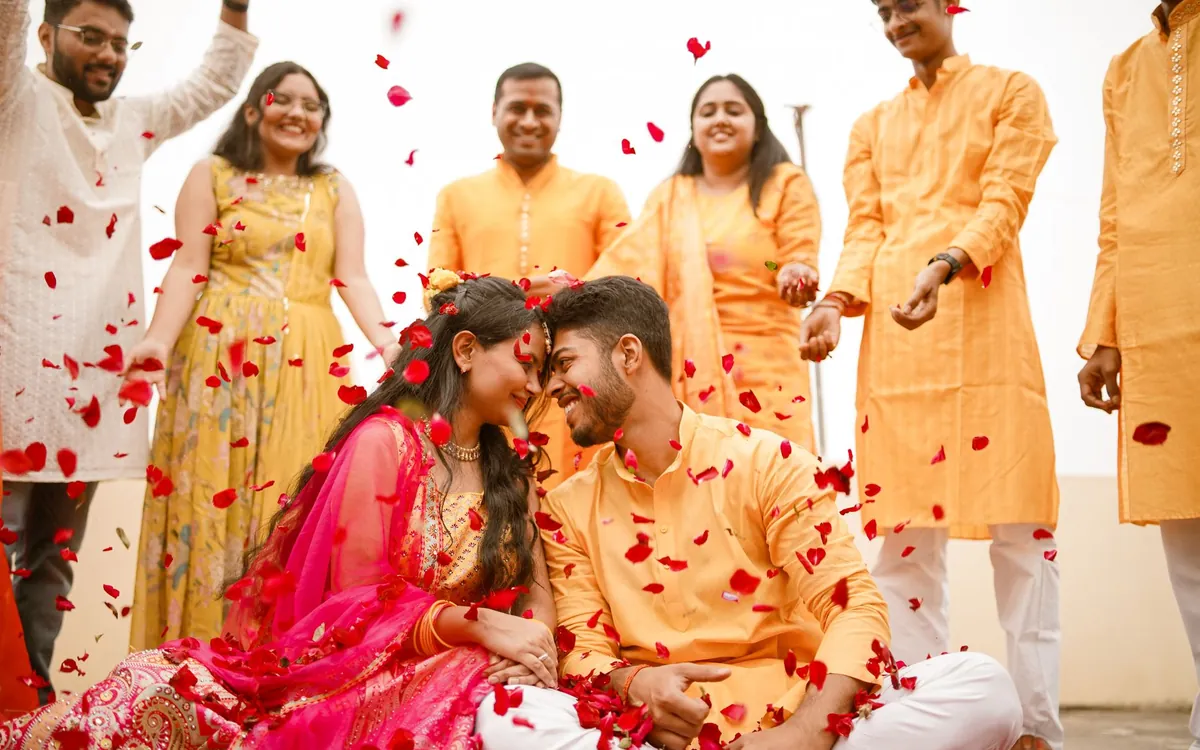
- At the tilak or haldi, when close relatives bless the bride or groom.
- At the wedding itself, usually handed over in an envelope or placed in a decorated bag carried by a family member.
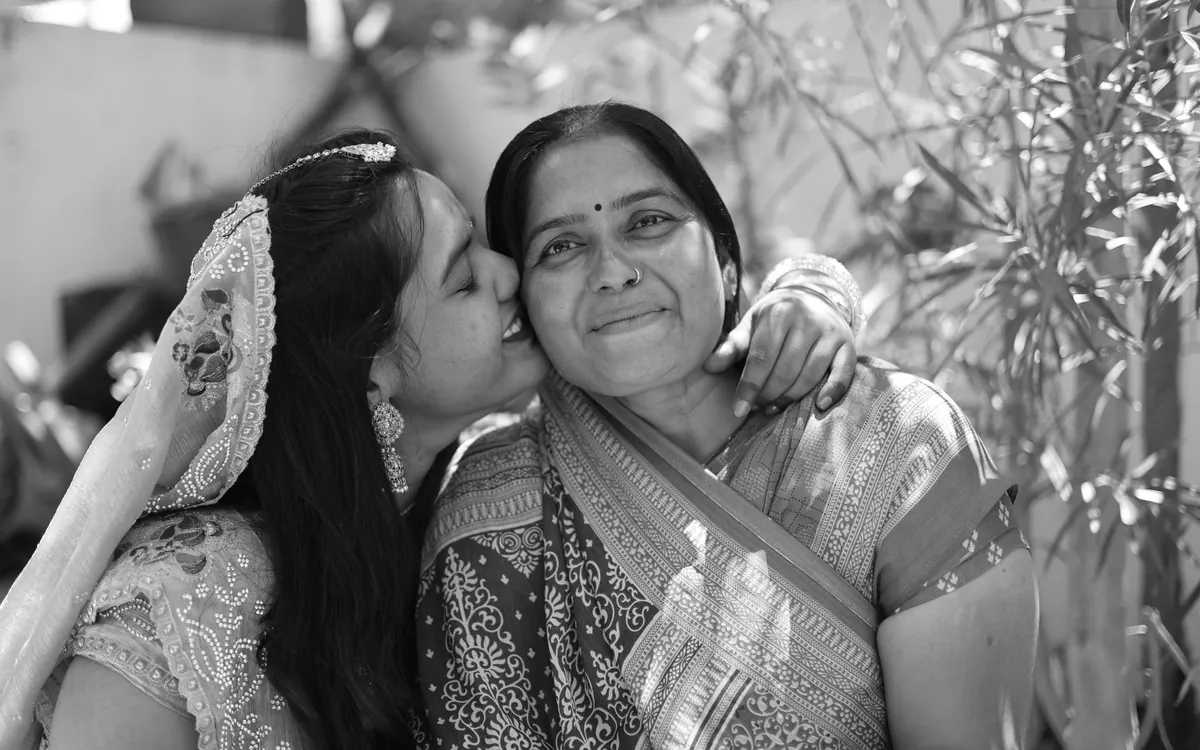
- At muh-dikhai, when the new bride is welcomed in her sasural and elders see her face and bless her.
Customs differ from region to region and even between families in the same city, so if you are unsure, quietly ask an elder from the host family what is expected.
Why the amount ends in one
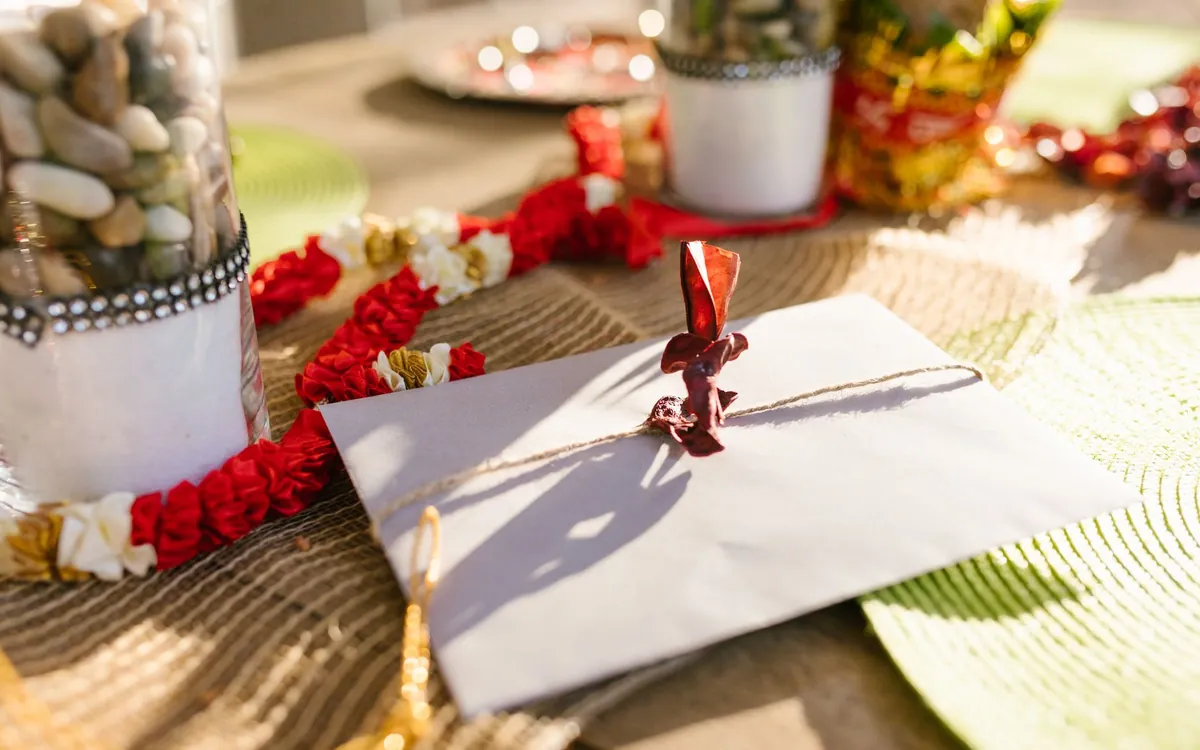
You will rarely see an Indian family give exactly 500 or 1,000 rupees as shagun. The extra rupee, often a coin stuck on the envelope, turns a round number into 501 or 1,001.
The common explanation is that a round number feels like an ending, while the extra one means the blessing continues and keeps growing. Some families also say an odd number cannot be divided equally, so the couple's happiness should not be split. Readymade shagun envelopes often come with a coin slot for exactly this reason.
How much shagun to give
There is no fixed rule, and nobody should feel pressured to give beyond their means. A few things usually guide the amount:
- How close you are. Close relatives and old family friends generally give more than colleagues or neighbours.
- What the family gave at your own functions. Many households keep a quiet record of shagun received and return a similar or slightly higher amount when the time comes.
- The city and the scale of the wedding. Expectations at a large hotel wedding in Delhi or Mumbai are often different from a simple ceremony at a dharamshala or a family home.
- Whether you are attending as a family. One envelope from the whole family is normal; you do not need separate envelopes for each person.
If money is tight, a smaller amount given with warmth is perfectly respectable. Shagun is about the blessing, not the figure.
Wedding gift ideas that couples actually use
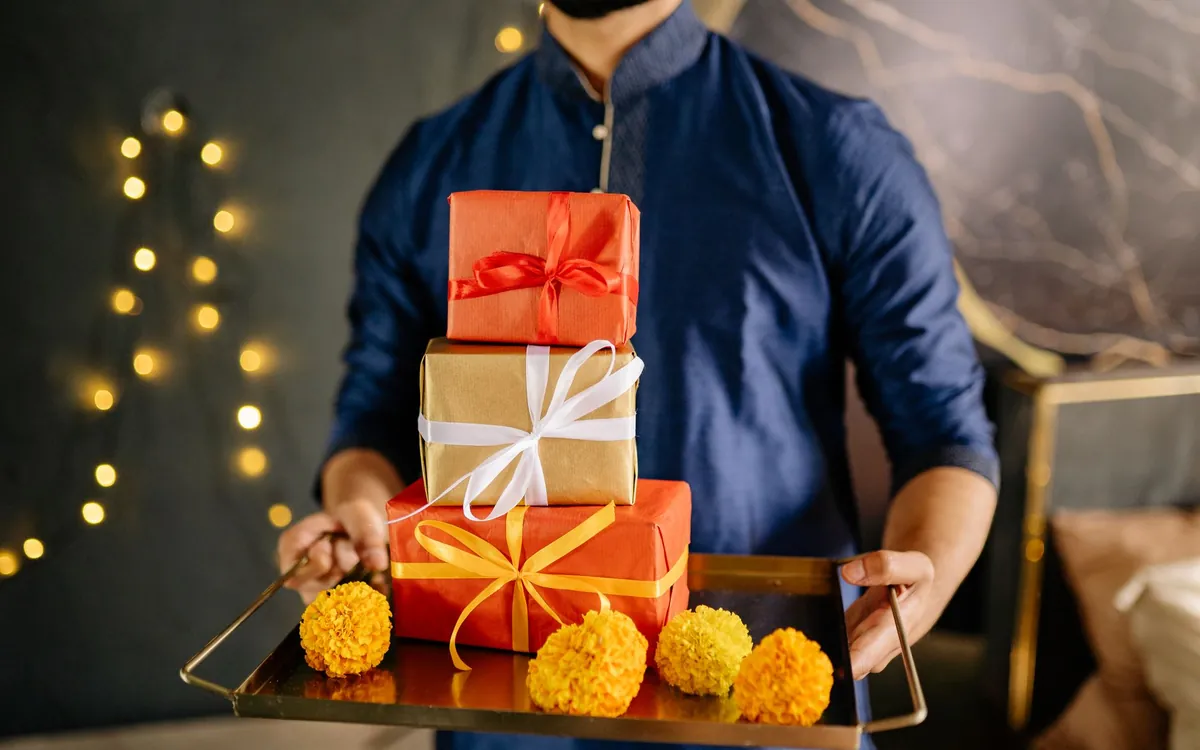
Cash is the most common and often the most useful gift, especially when the couple is setting up a new home. But if you would like to give something, or want to add a gift to the envelope, here are ideas at different levels.
Under 2,000 rupees
- A good-quality pressure cooker, kadhai or steel dinner set
- A framed family photograph or a printed album of their pre-wedding moments
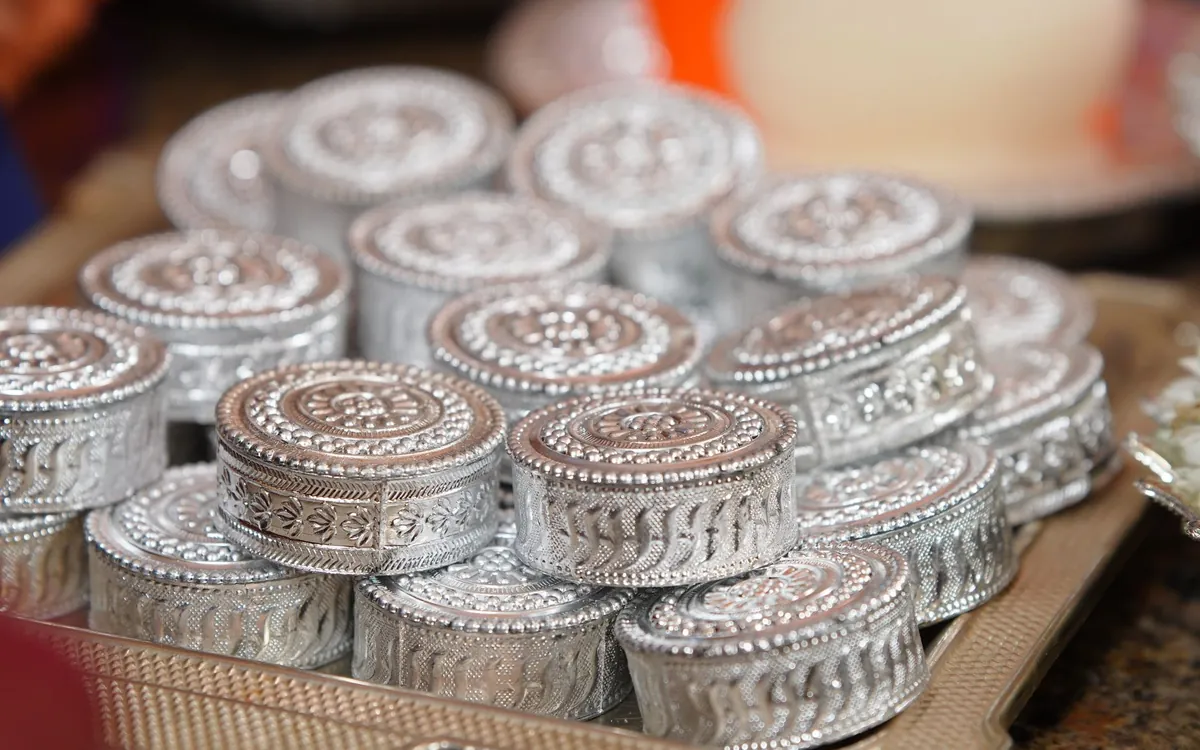
- A silver-plated pooja thali or a pair of brass diyas for their first festivals together
- A cookbook of family recipes, handwritten by aunts and grandmothers
2,000 to 10,000 rupees
- Kitchen appliances such as a mixer grinder, air fryer or induction cooktop
- A quality bedsheet and blanket set
- A small silver coin or idol of Lakshmi and Ganesh, which many families see as a lasting blessing
- Luggage for the honeymoon or for a couple moving to another city
For close family
- Gold or silver jewellery, given within the family's own customs
- Contribution towards a larger household item, pooled among cousins
- A savings deposit or a gift in the couple's name, if the family is comfortable with that
If many people may give the same thing, a quick WhatsApp message to a sibling or cousin of the couple can avoid three pressure cookers arriving on the same day.
Shagun and gift etiquette for guests
A few small habits make giving easier for everyone.
- Write your name clearly on the envelope. After the wedding, families sit down to note who gave what. A blank envelope causes confusion and sometimes hurt feelings.
- Hand it to the right person. At most weddings a family member sits near the stage or entrance to receive envelopes. Give it directly to the couple or that person, not to staff.
- Use a fresh note if you can. New notes are considered auspicious, and many people collect them from the bank before the wedding season.
- Do not ask about the amounts others gave. It is personal, and comparing creates bad feeling.
- Keep gifts simple to carry. Large boxes are hard to manage at a banquet hall. If the gift is bulky, send it to the home before or after the wedding.
Etiquette for the couple and the hosting family
The family receiving shagun also has a role.
- Keep a careful record. A notebook or a shared spreadsheet listing each name and amount helps you return the gesture fairly at their functions later.
- Thank people personally. A short call or a WhatsApp message after the wedding means more than people expect, especially to elders.
- Never make gifts a condition. Shagun given freely is a blessing; anything demanded from the bride's family is dowry, which is illegal in India and has no place in a respectful match. Our article on dowry-free marriage talks about why more families are choosing simple, honest weddings.
- Include it in the budget plan. Families often spend on return gifts, mithai boxes and shagun for relatives on the other side. Our wedding budget planning guide helps you account for these smaller costs.
If you are printing cards, a polite line such as "Your blessings are our gift" is fine, but avoid asking for cash directly. Our guide to wedding invitation wording has sample lines.

Before the shagun, finding the right match
Every shagun envelope starts with two families saying yes. If you are still looking for that yes, Goswami Matrimony brings together families from the Goswami and Dashnami community in one place. Browse brides and grooms, or register a free profile and let the right rishta find you.
Frequently asked questions
What is the right shagun amount for a wedding?
There is no fixed amount. Most people decide based on how close they are to the family, what was given at their own functions, and their own budget. Amounts ending in one, such as 501 or 1,101 rupees, are the most common.
Why is one rupee added to shagun?
The extra rupee turns a round figure into an odd number. It is commonly explained as a sign that the blessing should continue and grow rather than end, and that the couple's happiness should not be divided.
Is it better to give cash or a gift at an Indian wedding?
Cash is the most common choice and is usually the most useful, since couples can spend it on what they really need. A thoughtful gift is equally welcome, especially from close family, as long as it is practical or meaningful.
Should shagun be given to the bride or the groom?
It depends on whose side invited you and on family custom. Guests usually give the envelope to the couple together on the stage, or to the family member collecting envelopes near the entrance.
Is shagun the same as dowry?
No. Shagun is a voluntary blessing given by guests and relatives, usually a modest amount. Dowry is a demand made on the bride's family, which is illegal in India and should never be part of a marriage.