In Vedic astrology, gemstones are believed to strengthen the planets they represent, and a few are commonly linked with marriage: yellow sapphire (pukhraj) for Jupiter, diamond or white sapphire for Venus, red coral (moonga) for Mars and pearl (moti) for the Moon. They are always recommended for a specific birth chart, never by rashi or sun sign alone. Treat them as a traditional practice to discuss with a qualified astrologer, not a guaranteed fix for delays or differences in marriage.
Many Goswami and Dashnami families consult a family pandit or jyotishi when a match is delayed or a kundli shows a dosha, and gemstones often come up in that conversation. This guide explains the basics so you can follow the discussion and ask sensible questions.
How gemstones work in Vedic astrology
Traditional jyotish links each of the nine grahas (planets) with a gemstone, together called the navratna. The belief is that wearing the right stone, in contact with the skin, on the right finger and in the right metal, strengthens that planet's positive influence in your life.
The key word is right. A stone is chosen only after the astrologer studies the full kundli: which planets are weak, which are strong, which houses they rule, and which planetary periods (dashas) are running. Two people with the same problem, such as a delayed marriage, may be advised completely different stones, or no stone at all.
If you want to understand the chart your astrologer is looking at, our beginner's guide on how to read a kundli for marriage explains the houses and planets involved.
The nine gemstones and their planets
Here is the traditional pairing of planets and stones, along with the qualities each planet is associated with:
- Ruby (manik) for the Sun: confidence, authority, relationship with father.
- Pearl (moti) for the Moon: emotions, peace of mind, relationship with mother.
- Red coral (moonga) for Mars: energy, courage, drive.
- Emerald (panna) for Mercury: communication, intellect, business.
- Yellow sapphire (pukhraj) for Jupiter: wisdom, fortune, children and, in a woman's chart, traditionally the husband.
- Diamond (heera) for Venus: love, beauty, comfort and, in a man's chart, traditionally the wife.
- Blue sapphire (neelam) for Saturn: discipline, patience, hard work.
- Hessonite (gomed) for Rahu: ambition and unconventional paths.
- Cat's eye (lehsunia) for Ketu: detachment and spiritual focus.
Gemstones most often linked with marriage
Yellow sapphire for Jupiter
Jupiter, or Guru, is considered the planet of wisdom and blessings. In traditional astrology it is the significator of the husband in a woman's horoscope, so astrologers sometimes suggest pukhraj when Jupiter is weak and marriage seems delayed. It is usually worn in gold on the index finger, often starting on a Thursday.
Diamond or white sapphire for Venus
Venus, or Shukra, governs love, attraction and married happiness, and is the significator of the wife in a man's chart. Diamond is the traditional stone; white sapphire or opal is sometimes suggested as an alternative. It is commonly worn on the middle or ring finger, often in silver, white gold or platinum.
Red coral for Mars
Because Mars is involved in Mangal dosha, families with a manglik chart often ask about red coral. Here, opinions among astrologers differ sharply. Some suggest coral to strengthen a well-placed Mars, while others feel it may intensify an already strong or troublesome Mars. This is exactly why the decision must rest on the full chart. Our article on Manglik dosha and its remedies covers other traditional remedies too.
Pearl for the Moon
The Moon governs the mind and emotions. A pearl is sometimes suggested to bring calm and emotional balance, which astrologers may link with harmony in married life.

Important cautions before buying a gemstone
Gemstones are taken seriously in jyotish, and the tradition itself warns against careless use. Keep these points in mind:
- Never choose a stone by rashi, sun sign or a website quiz. The same gemstone can be considered helpful for one chart and harmful for another.
- Be especially careful with neelam, gomed and lehsunia. Many astrologers consider these stones powerful and suggest wearing them on trial first, or not at all.
- Do not combine stones on your own. Certain combinations are traditionally avoided, for example stones of planets considered enemies.
- Insist on a lab certificate. Natural, untreated stones are what jyotish recommends, and treated or synthetic stones are common in the market. Ask for a certificate from a recognised gem testing laboratory.
- Consider substitutes (uparatna) if the budget is tight. Astrologers often suggest more affordable alternatives, such as yellow topaz in place of yellow sapphire. Do not take loans or strain the family budget for a stone.
- Remember that a stone is not a substitute for real effort. A delayed marriage often has practical reasons too: a narrow search, unrealistic expectations or an unclear profile.
Also note that gemstones are a matter of belief and tradition. There is no scientific evidence that they change outcomes in marriage, and no honest astrologer should promise a wedding by a fixed date because you wear a ring. If anyone pressures you into an expensive purchase with fear about your child's future, take a second opinion.
Questions to ask your astrologer
Before you buy anything, ask:
- Which planet are you suggesting this stone for, and why?
- Is that planet functionally helpful in this chart?
- How many carats or rattis, which metal and which finger?
- Should I wear it on trial first? What should I watch for?
- Is there a substitute stone or a non-gemstone remedy, such as a mantra, fast or daan?
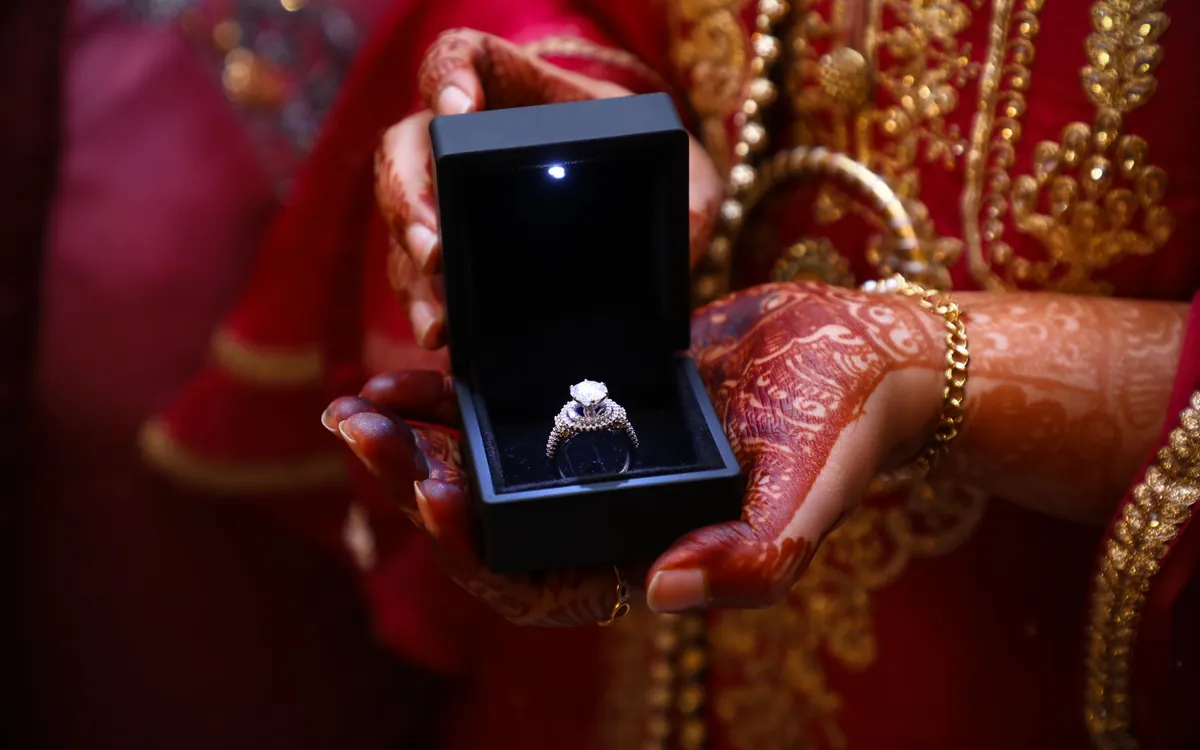
For more, see our list of questions to ask your astrologer about a kundli match. And if a gemstone is going into an engagement ring, our engagement ring guide explains hallmarks, certificates and practical design choices.
Keeping astrology in balance
Gemstones can be a meaningful part of a family's faith and tradition, and many people find comfort in following the advice of a trusted pandit. The healthiest approach is to combine that faith with practical steps: a clear profile, an open-minded search and honest conversations between families. Start by browsing brides and grooms from Goswami and Dashnami families, or register your profile on Goswami Matrimony and share your kundli details with matches.
Frequently asked questions
Which gemstone is good for early marriage?
Astrologers most often discuss yellow sapphire for Jupiter, especially in a woman's chart, and diamond or white sapphire for Venus. However, the right stone depends entirely on the individual kundli, so consult a qualified astrologer before wearing any.
Can I wear a gemstone based on my rashi?
It is not advisable. In Vedic astrology, gemstones are chosen after studying the full birth chart, including planetary strength and house lordship. A stone that suits one person of a rashi may be considered unsuitable for another.
Is red coral good for Manglik people?
Astrologers differ on this. Some suggest red coral when Mars is well placed, while others caution that it may strengthen an already difficult Mars. Only an astrologer who has studied your full chart can advise on it.
Are substitute gemstones effective?
In traditional practice, uparatna or substitute stones are considered milder alternatives to the main gem. Many astrologers suggest them when the main stone is too costly, but views on their strength vary.
Do gemstones guarantee a happy marriage?
No. Gemstones are a traditional belief, not a guarantee, and there is no scientific evidence that they change outcomes. A happy marriage depends far more on compatibility, respect, communication and family support.