
When you take two kundlis to an astrologer, don't just ask for the guna score. Ask how many gunas match and which kootas are weak. Ask whether any dosha, such as Nadi, Bhakoot or Manglik, is present, and whether it is cancelled by other factors in the charts. Ask what the individual charts say about marriage beyond the score, and what practical remedies or timing they suggest. Clear questions give you a fuller, calmer picture and help your family decide sensibly.
Many families come away from an astrologer with a single number and a lot of worry. These questions will help you get more useful answers.
Before you go: have the right details ready
An astrologer can only work with what you give them. For both the boy and the girl, bring:
- Date of birth
- Exact time of birth, as accurately as possible
- Place of birth, with the town or city
- The kundlis themselves, if already made
Birth time matters because the ascendant and some house positions change every couple of hours. If a time is uncertain, tell the astrologer, so they can say how much that affects the reading. If you want to understand the basics first, our beginner's guide to reading a kundli for marriage is a good start.

Questions about the guna milan score
Guna milan (Ashtakoota matching) compares eight factors called kootas, for a maximum of 36 points. Many families treat 18 or more as acceptable, but the total alone can mislead. Ask:
- "How many gunas match in total?"
- "Which kootas scored low, and does it matter here?" The eight kootas are Varna, Vashya, Tara, Yoni, Graha Maitri, Gana, Bhakoot and Nadi. A low score in Nadi or Bhakoot is usually taken more seriously than a low score in Varna.
- "Is a good total hiding a serious weakness?" A score of 26 with zero in Nadi may be viewed differently from 22 with no doshas.
- "Is a lower total balanced by strong Graha Maitri?" Friendship between the moon-sign lords is often given weight by astrologers.
Our detailed explainer on guna milan and kundli matching covers each koota in simple language.
Questions about doshas and cancellations
This is where families worry most, and where good questions help most.
Nadi dosha
Ask: "Is there Nadi dosha? If so, is it cancelled?" Traditional texts describe several situations in which Nadi dosha is considered cancelled, for example when certain nakshatra or rashi conditions are met. See our guide to Nadi dosha and its cancellation.
Bhakoot dosha
Ask: "Is there Bhakoot dosha, and is it cancelled by friendly moon-sign lords or other factors?" Our article on Bhakoot dosha explains how this works.
Manglik (Mangal) dosha
Ask: "Is either person manglik? How strong is it, and is it cancelled or matched?" Manglik dosha is often considered balanced when both partners are manglik, and its strength varies from chart to chart. Our Manglik dosha guide explains the common views.
A useful follow-up for any dosha: "On a scale from minor to serious, how concerned should we really be?" A good astrologer will give a straight answer.

Questions beyond the score
Guna milan mainly compares the moon's position in the two charts. Many astrologers also look at the individual charts. Ask:
- "What does each chart say about marriage, apart from matching?" For example, the seventh house and its lord.
- "Are there any periods (dashas) ahead that need care?"
- "Is the overall match supportive for family life, health and finances?"
- "What are the strengths of this match, not just the problems?" This question often changes the tone of the whole conversation.
Questions about remedies and timing
If there is a concern, ask:
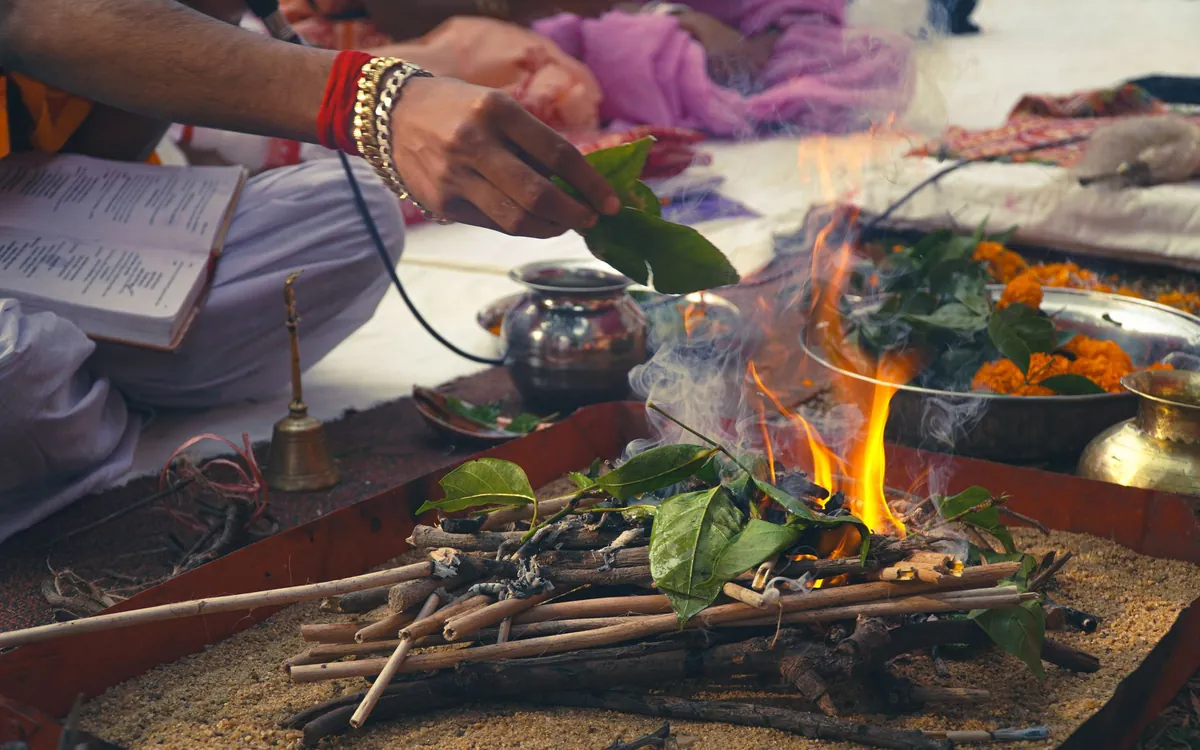
- "What remedy do you suggest, and why?" Common suggestions include specific pujas, prayers, fasting or charity.
- "Is this remedy essential, or only a precaution?"
- "Can you suggest an auspicious time for the engagement or wedding?" See our guide to choosing a shubh muhurat.
Be careful with any remedy that involves expensive items or repeated payments. A sincere astrologer explains the reason for a remedy and does not create fear to sell it.
Keep astrology in balance
For many Goswami and Dashnami families, kundli matching is an important tradition, and it deserves respect. It works best as one part of the decision, alongside values, education, family background, health and how the two people get on. Our article on compatibility beyond kundli looks at these other factors.
If a match looks promising on every other front, it is reasonable to ask for a second opinion before saying no over a single dosha.
When you are ready to find matches, browse brides and grooms on Goswami Matrimony, or create your family's profile.
Frequently asked questions
How many gunas should match for a good marriage?
Out of 36 gunas, 18 or more is traditionally considered acceptable, and higher scores are considered better. However, astrologers also look at which kootas are weak and whether any dosha is present, so the total alone should not decide the match.
Can a marriage go ahead if Nadi dosha is present?
Many astrologers consider Nadi dosha cancelled in certain conditions, for example when specific nakshatra or rashi combinations apply. Ask your astrologer whether a cancellation applies in your case and how serious they consider it.
Do we need an exact birth time for kundli matching?
An exact birth time helps, because some chart positions change every couple of hours. Guna milan depends mainly on the moon's nakshatra, which changes more slowly, so a rough time may still give a usable result. Tell the astrologer if the time is uncertain.
Should we get a second opinion on a kundli match?
A second opinion is reasonable when the decision matters and the first reading raises a serious concern. Different astrologers may weigh doshas and cancellations differently, and a second view can give your family more confidence.
Are remedies for doshas necessary?
It depends on the astrologer's assessment and your family's beliefs. Ask whether a remedy is essential or only a precaution, and be wary of anyone who pushes expensive or repeated payments.