Choosing an engagement ring in India comes down to four things: a budget your family is comfortable with, a metal and stone the wearer will actually enjoy every day, the right size, and proof of quality such as a BIS hallmark or a diamond certificate. Tradition matters too, because in many families the ring is exchanged at the sagai or roka in front of both sides. Get these basics right and the ring becomes a keepsake rather than a source of stress.
This guide is written for both the couple and their parents, since in most Indian homes the ring is a family decision as much as a personal one.
Where the ring fits in Indian tradition
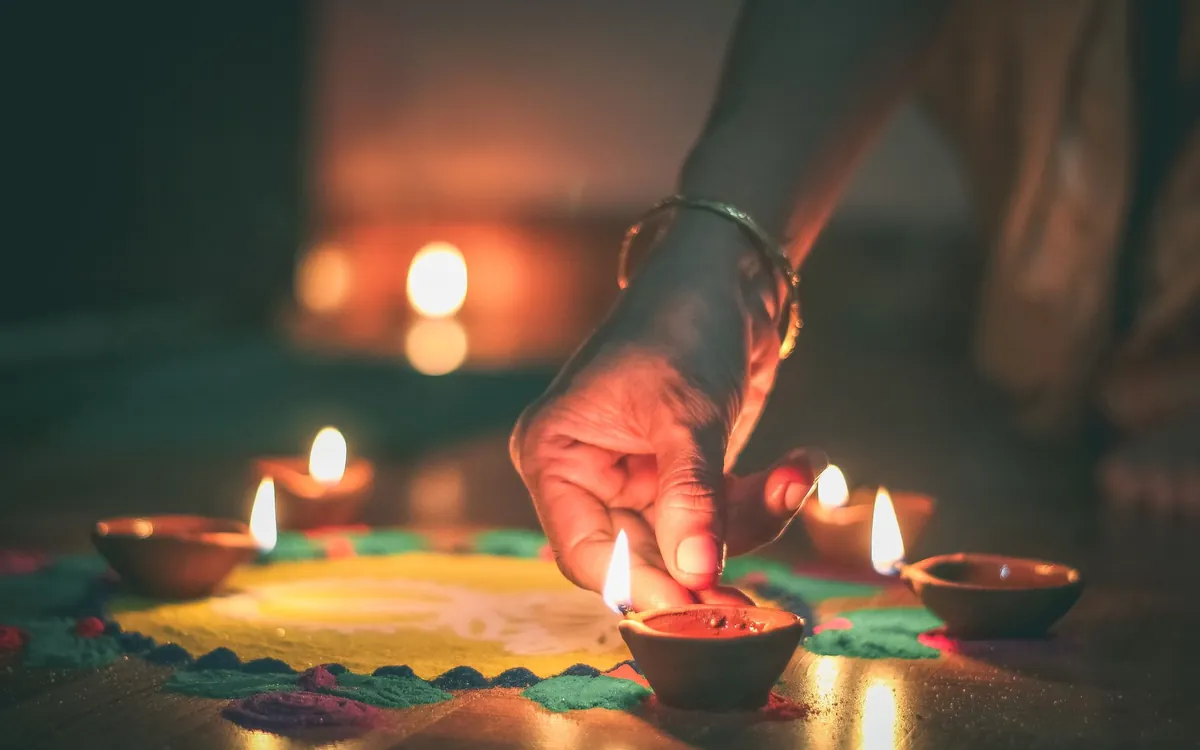
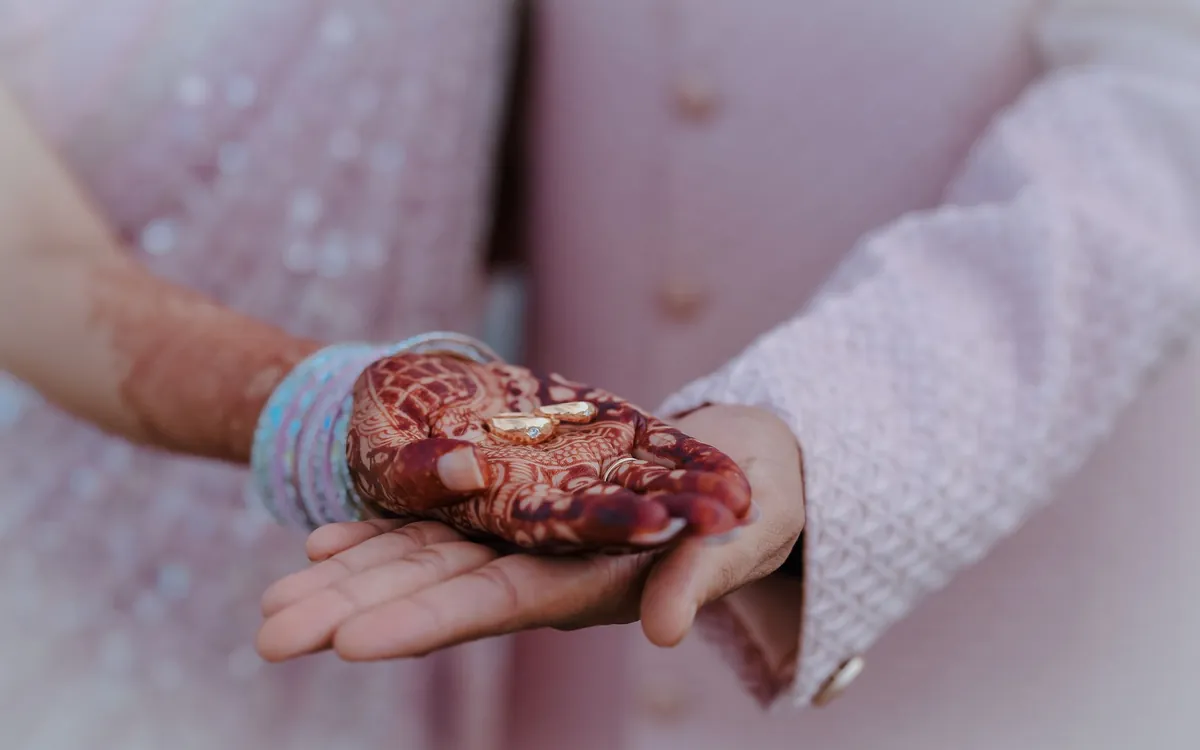
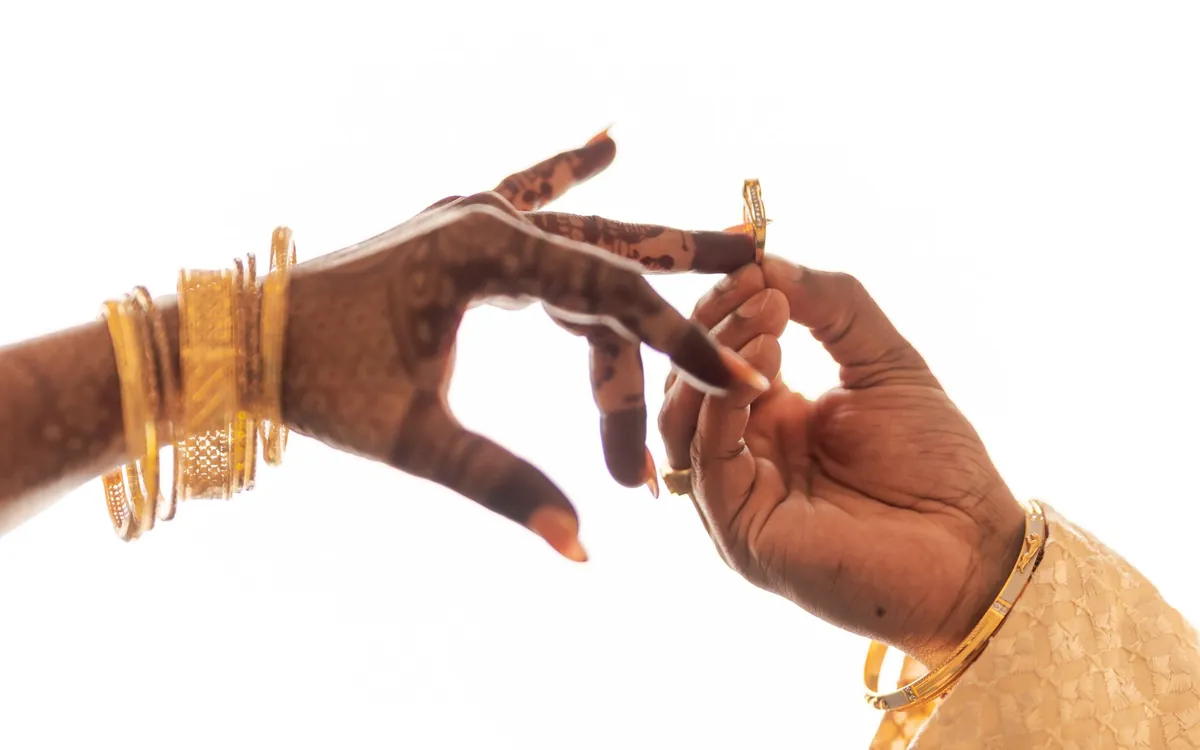
The engagement ring is a relatively recent addition to Hindu wedding customs, but it is now common across the country. In many families, the boy and girl exchange rings at the sagai or ring ceremony, often with pandit ji present, a small puja and both families gathered. In others, the ring exchange happens alongside the roka ceremony or the tilak.
Customs about who buys which ring vary by region and family. Commonly, each side buys the ring for the other: the boy's family chooses the ring for the bride, and the girl's family chooses the ring for the groom. Some couples now shop together, which removes guesswork about taste and size. There is no single correct way, so talk openly and agree early.
Setting a sensible budget
There is no fixed rule for how much to spend on an engagement ring. Advice you may have heard about spending a certain number of months' salary comes from foreign advertising, not Indian tradition.
A practical approach:
- Start from your overall wedding budget. The ring is one line among many, from venue and catering to clothes and gifts. Our guide to wedding budget planning for Indian families can help you see where it fits.
- Decide the figure before you visit a jeweller. Showrooms are designed to make you stretch. Walk in with a number in mind.
- Budget for both rings. If each family buys one, agree roughly on a similar range so neither side feels awkward.
- Remember making charges and GST. The price of gold or diamond is only part of the bill. Ask for a written breakup.
A modest, well-made ring chosen with care means far more than an expensive one bought under pressure. Many families today prefer to keep the engagement simple and spend on things that last, in the same spirit as dowry-free, simple weddings.
Choosing the metal and stone
Gold
Gold remains a favourite in Indian families because it holds value and suits traditional outfits. 22 karat gold is common for traditional jewellery, while 18 karat or 14 karat is often used for rings with stones because it is harder and holds settings more securely. Yellow, rose and white gold are all popular.
Diamond
A diamond solitaire or a cluster of small diamonds is the most common modern choice. If you are buying a diamond, ask about the four Cs: cut, colour, clarity and carat. Cut affects sparkle the most, so many buyers prefer a well-cut smaller stone to a poorly cut larger one.
Lab-grown diamonds are now widely available in Indian cities. They are real diamonds chemically, but usually cost much less than natural ones and may hold resale value differently. Make sure the jeweller states clearly which one you are buying.
Platinum
Platinum rings are popular for grooms and for couples who want matching bands. Platinum is durable and naturally white, though usually more expensive than gold of the same design.
Gemstones
Some families prefer a ruby, emerald or other coloured stone, sometimes for astrological reasons. If a family astrologer has recommended a particular stone, follow their guidance on wearing it, and buy it with a proper lab certificate.
Quality checks before you pay
Whatever you choose, protect your money with a few simple checks:
- Look for the BIS hallmark on gold. Hallmarked gold jewellery in India carries the BIS mark, the purity grade and a unique HUID code. You can verify the HUID using the BIS Care app.
- Ask for a diamond certificate. For a solitaire, insist on a certificate from a recognised lab such as GIA or IGI, and check that the certificate number matches the stone where it is laser-inscribed.
- Get a detailed bill. It should list metal weight, purity, stone weight, stone price, making charges and GST separately.
- Ask about the buyback and exchange policy. Policies differ widely between jewellers. Know what you would get back if you ever exchanged the ring.
- Buy from a jeweller you trust. A family jeweller with a long reputation in your city, or a well-known brand, reduces risk.
Getting the size and style right
Ring size causes more last-minute panic than anything else. If you are planning a surprise, borrow a ring the person already wears on the right finger and take it to the jeweller. Fingers can be slightly larger in the evening and in warm weather, so measure more than once if you can. Most jewellers will resize a simple band, but intricate or fully studded designs may be hard to alter.
On style, think about daily life. A high-set solitaire looks beautiful at the sagai but may catch on dupattas, hair and kitchen work. A lower setting or a band with small stones is often easier for someone who works with their hands, travels a lot or simply wants to wear it every day. For grooms, a plain or lightly textured band suits most men who are not used to jewellery.
Finally, consider an engraving. Initials or the engagement date inside the band is a small touch that couples treasure for years.
Making the decision together
The best engagement rings are chosen with a little patience and a lot of conversation. Involve the person who will wear it, respect the family's customs, and do not let a showroom rush you. If you are still looking for the person to share that ring with, browse brides and grooms from Goswami and Dashnami families, or register your profile on Goswami Matrimony to get started.
Frequently asked questions
Who buys the engagement ring in an Indian wedding?
It depends on family and regional custom. Often the boy's family buys the bride's ring and the girl's family buys the groom's ring, but many couples now shop together. Agree on it early to avoid confusion.
How much should we spend on an engagement ring?
There is no fixed rule. Set a figure that fits your overall wedding budget before visiting a jeweller, and include making charges and GST in that figure.
Is a lab-grown diamond a real diamond?
Yes, lab-grown diamonds are chemically real diamonds, but they are produced in a laboratory rather than mined. They usually cost less than natural diamonds, and the jeweller should clearly state which type you are buying.
How can I check if the gold in my ring is genuine?
Look for the BIS hallmark, which includes the purity grade and a unique HUID code. You can verify this code using the official BIS Care app, and you should also keep a detailed bill.
Can an engagement ring be resized later?
Simple gold or platinum bands can usually be resized by a jeweller. Rings with stones set all the way around, or very intricate designs, may be difficult to resize, so it is worth getting the size right the first time.