Karwa Chauth is a day-long fast that married Hindu women keep for the long life and well-being of their husbands, broken only after sighting the moon at night. For a newly married woman, the first Karwa Chauth is a special occasion, usually marked with sargi from the mother-in-law, a gift from her own parents, a new outfit and a group puja in the evening. Customs vary from family to family, so the best preparation is to ask both sides what they follow.
This guide explains the meaning, the main rituals and how modern couples can make the day their own.
What Karwa Chauth means
The festival falls on the fourth day (chauth) of the waning moon in the month of Kartik, as counted in the purnimanta calendar followed in much of North India. The word karwa refers to the small earthen pot used in the puja.
The day is most widely observed in Punjab, Haryana, Delhi, Rajasthan, Uttar Pradesh, Madhya Pradesh and Himachal Pradesh, and by families from these regions wherever they now live, from Mumbai to Melbourne. Many Goswami families in North India keep the fast, though practices differ between households, so do not assume your new home follows the same customs as your parents' home.
The stories behind the fast
Several stories are told during the puja. The best known is the tale of Queen Veervati, who broke her fast early after her brothers showed her a false moon, and later regained her husband's life through devotion and by keeping the fast properly the next year. Another story tells of Karwa, a devoted wife whose faith protected her husband from a crocodile. Some families also connect the day with Savitri and Satyavan. The common thread is love, faith and the bond between husband and wife.
The rituals, step by step
Details change from region to region, but the day usually follows this pattern.
Sargi before sunrise
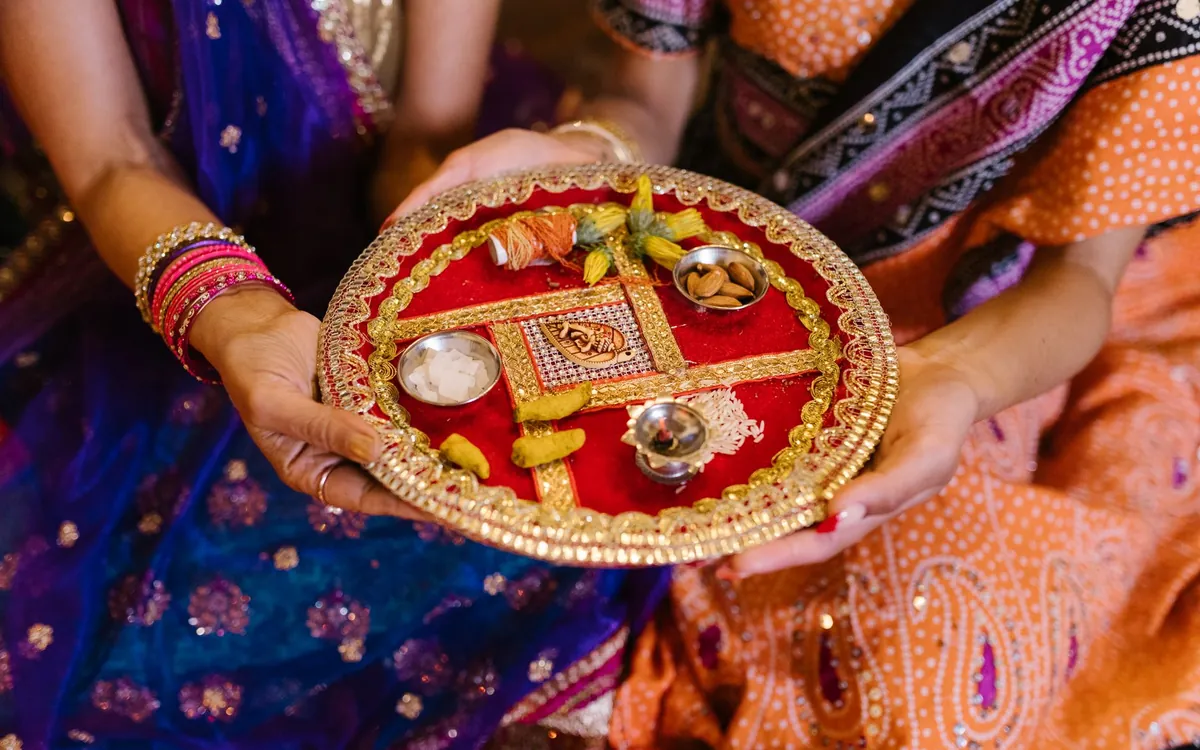
Before dawn, the mother-in-law traditionally gives her daughter-in-law a plate of sargi: sweets, dry fruits, mathri, fruit, sometimes pheni, along with a little shringar such as bangles or sindoor. The bride eats this pre-dawn meal before the fast begins. For a new bride, receiving sargi is a warm gesture of welcome into the family.
The fast through the day
Most women keep a nirjala fast, without food or water, from sunrise until moonrise. Some keep a lighter version with water or fruit, which many families accept, especially for health reasons. The day is often spent with mehndi, getting ready and chatting with other women in the family or neighbourhood.
Baya from the bride's family
In many North Indian families, the bride's parents send a baya (also called bayna) to her in-laws' home: clothes, sweets, dry fruits and gifts for the mother-in-law. For the first Karwa Chauth, this is often more elaborate. Talk to your parents beforehand so that nobody feels pressured to overspend. A thoughtful gift matters more than an expensive one.
The evening puja
In the evening, married women gather, often in a relative's home, a temple or a society hall. They dress in bridal colours, usually red, pink or maroon, sit in a circle with their decorated thalis, listen to the Karwa Chauth katha and pass the thalis around while singing traditional songs. An older woman of the family or a pandit ji often leads the katha.
Moonrise and breaking the fast
When the moon appears, the wife looks at it through a sieve (channi), offers water (arghya) to the moon, then looks at her husband through the same sieve. He offers her the first sip of water and the first bite of food, and the fast is broken. In many homes, she then touches the feet of her husband and elders for blessings.
Your first Karwa Chauth: customs and tips
The first Karwa Chauth often comes within months of the wedding, when the bride is still settling into a new home. A few things help.
- Ask your mother-in-law early. Find out what the family does: sargi items, timing of the puja, whether you go to a relative's home. Asking shows respect and avoids awkward surprises.
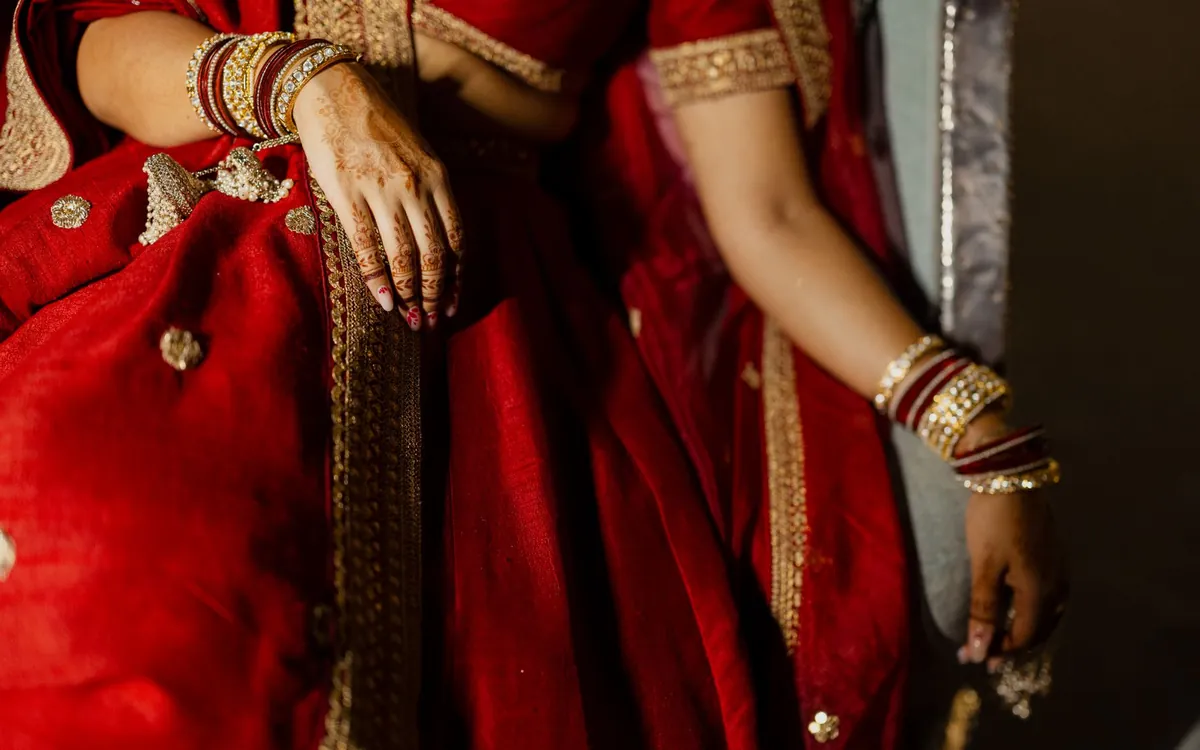
- Wear something from the wedding. Many brides wear their wedding lehenga or a bridal saree on the first Karwa Chauth, along with their mangalsutra and sindoor.
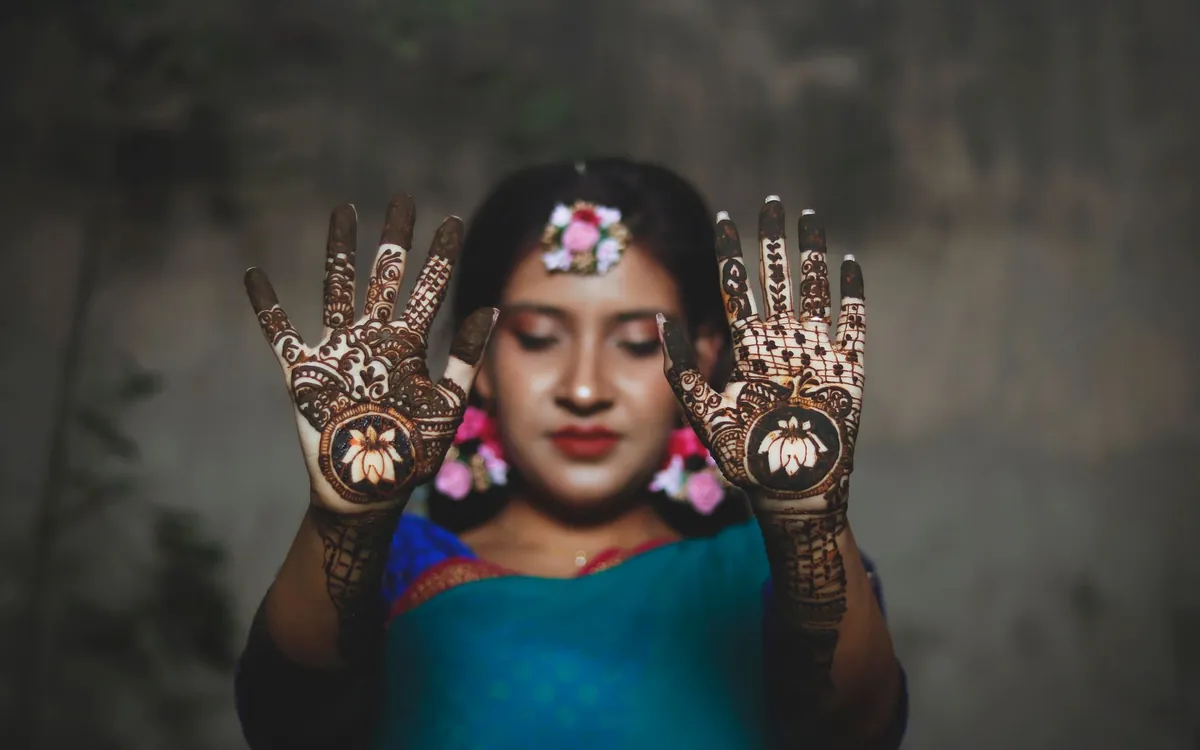
- Get mehndi done the day before. It darkens overnight and saves time on the fasting day.
- Keep both families involved. If your parents live nearby, a call or short visit means a lot to them on this day.
- Check moonrise in your city. Moonrise times differ between cities, and clouds sometimes hide the moon. Families usually follow local timings or a panchang; if the moon is not visible, many follow the expected moonrise time.
The first festivals after the wedding are a good chance to build warmth with your new family. Our guide to building a good relationship with your in-laws has more ideas.
Modern couples and Karwa Chauth
Many young couples now observe the day in their own way, and most families are comfortable with it.
- Husbands fasting too. Some husbands keep the fast alongside their wives as a sign of partnership. There is no rule against it.
- A lighter fast. Some women drink water or have fruit, especially if they work long hours or commute in city traffic.
- Long-distance couples. If the husband is travelling or working in another city, many couples break the fast on a video call.
- Choosing not to fast. Some women choose not to fast for personal or health reasons. This is a decision for the couple to make together and discuss respectfully with the family.
What matters most is that the observance comes from affection, not obligation. Our article on adjusting to married life talks about how couples can blend traditions from two families during the first year.
Fasting safely
A nirjala fast is demanding, especially on a long day.
- Eat a balanced sargi with some protein and fruit, not just sweets.
- Drink plenty of water the day before.
- Rest during the day where possible and avoid heavy exertion.
- If you are pregnant, breastfeeding, diabetic, have low blood pressure or take regular medicine, speak to your doctor before fasting. A modified fast is perfectly acceptable in most families.
- Break the fast gently with water and light food before a heavy meal.
If you are still looking for a partner to share festivals like this with, browse brides and grooms from Goswami and Dashnami families, or register on Goswami Matrimony to begin your search.
Frequently asked questions
Can unmarried girls keep the Karwa Chauth fast?
Some unmarried girls, especially those who are engaged, keep the fast for their future husband. Customs vary, and in some families they break the fast by sighting the stars rather than the moon. It is best to follow what your family considers appropriate.
What is given in sargi for the first Karwa Chauth?
Sargi usually includes sweets, dry fruits, fruit, mathri or pheni, and items of shringar such as bangles, bindi or sindoor. For the first Karwa Chauth, many mothers-in-law also give a new saree or suit and a piece of jewellery.
Can a pregnant woman keep the Karwa Chauth fast?
A pregnant woman should consult her doctor before fasting. Many families encourage a modified fast with water, milk or fruit during pregnancy, as the health of the mother and baby comes first.
What should the husband do on Karwa Chauth?
The husband traditionally offers his wife the first sip of water and bite of food after moonrise. Many husbands also help with preparations, plan a gift or dinner, or keep the fast with their wife.
What if the moon is not visible on Karwa Chauth?
If clouds hide the moon, many families break the fast at the expected moonrise time for their city, after offering prayers facing the direction of the moon. Some follow the guidance of their family elders or pandit ji.