
The first in-person meeting with a prospective match works best when it is short, held in a public or family-friendly place, and planned with both families in the loop. Keep the conversation relaxed and honest, take basic safety steps, and give yourself a day or two afterwards before sharing a decision. The aim is not to decide your whole future over one cup of chai, but to see whether a second conversation feels worth having.
This guide covers the practical side, for young adults meeting for the first time and for parents helping to arrange it.
Before the meeting: getting the basics right
By the time two people meet, there has usually been a biodata exchange, a few family calls and perhaps a phone or video chat. If you have not spoken yet, a short call first makes the meeting far less awkward. Our tips for the first phone call with a prospective match cover how to keep that first chat easy.
A few things to settle in advance:
- Confirm the basics. Make sure both families have shared accurate biodata, and that the profile details match what you have heard on calls.
- Agree on the format. Will it be a family meeting at home, a meeting at a restaurant with parents nearby, or a one-on-one coffee? Both sides should be comfortable.
- Fix a time window. An hour or ninety minutes is plenty for a first meeting. A clear end time takes pressure off everyone.
- Share contact details. Exchange a phone number for the day itself, so a late train or Bengaluru traffic does not cause confusion.
Choosing the venue and who comes along
Picking the right place
The best venue is somewhere public, easy to reach for both sides, and quiet enough to talk. A well-known café, a family restaurant, a hotel coffee shop or a temple garden all work. Avoid places that are very loud, very expensive, or far from the main road.
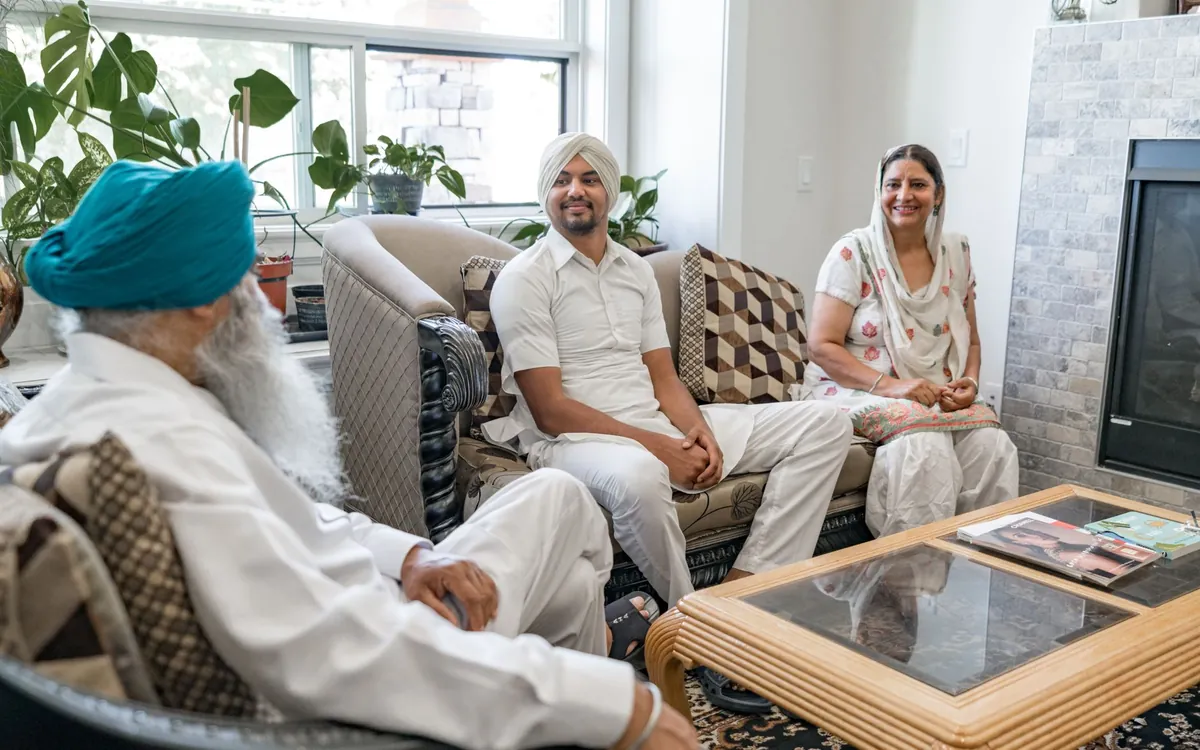
If the meeting is at one family's home, which is common in traditional rishta talks, the hosts should keep it simple. Tea, snacks and a warm welcome say more than an elaborate spread. Families travelling from another city, say from Jaipur to Delhi, will appreciate a venue close to the station or their hotel.
Who should be there
There is no single right answer. Many Goswami and Dashnami families still prefer the first meeting to include parents, with the two young people given some time to talk on their own. Others let the couple meet alone first and bring families together later.
What matters is that everyone agrees. A sensible middle path is for one parent or an elder sibling to come along, sit at a nearby table or wait outside, and leave the two to talk. If parents are present the whole time, the young people should still get at least twenty minutes of their own conversation.
What to talk about (and what to save for later)
The first meeting is about getting a feel for each other, not running an interview. Start light: work, the city you live in, how your week has been, what you enjoy on a free Sunday. Let the conversation find its own pace.
Good topics for a first meeting include:
- Daily life and routine, including work hours and travel
- Family, siblings and how close everyone is
- Hobbies, food, films and how you like to spend time
- What you each value most in a partner
- Broad plans, such as which city you see yourself living in
Some subjects need more trust and are better for a second or third meeting: detailed money questions, past relationships, health matters and very specific expectations about the wedding. Our list of questions to ask before an arranged marriage can help you plan what to raise and when.
A few simple courtesies go a long way. Arrive on time, keep your phone face down, listen more than you talk, and be honest about yourself. If parents are meeting too, greet the elders first, dress neatly and let them lead the early small talk.

Staying safe, especially when the match came through an online profile
Most people you meet through a matrimony site are genuine families looking for a good match. Still, basic caution is wise, particularly for women and for first meetings that were arranged online.
- Meet in a public place the first time, and arrange your own transport there and back.
- Tell someone at home where you are going, who you are meeting and when you expect to return. Share your live location on WhatsApp with a sibling or friend.
- Verify before you travel. Check that the person's name, job and city match their profile, and that a family member has spoken to theirs.
- Never carry or lend large amounts of money, and never share bank details, OTPs or documents at a first meeting.
- Trust your instincts. If something feels off, such as pressure to move to a private place or sudden stories of money trouble, it is perfectly fine to leave early.
If anything suspicious happens, read our guide to spotting matrimony scams. In India, you can report online fraud on the national cybercrime helpline 1930 or at cybercrime.gov.in.
After the meeting: next steps and giving an answer
Once you are home, take some time before giving an answer. Talk it over with your parents or a trusted sibling. Ask yourself simple questions. Did the conversation flow? Did you feel respected? Would you like to talk again?
A few practical points:
- Send a short thank-you message the same evening. It is polite whatever you decide.
- Let families share feedback through the usual channel, whether that is parents, the relative who suggested the match or a direct call.
- Do not leave the other side waiting for weeks. A reply within a few days is respectful.
- If it is a no, say so kindly. Our guide on how to politely decline a rishta has wording that keeps relations warm.
If it is a yes, the next step is usually a second meeting, longer conversations and, in time, the families meeting properly. There is no rush. A few good meetings tell you far more than one.

Ready to meet the right person?
Every good match starts with a genuine profile and a little courage to say hello. Browse brides and grooms from Goswami and Dashnami families, or create your profile and let the right families find you.
Frequently asked questions
Should parents attend the first meeting with a prospective match?
It depends on the family and the comfort of the two people. Many families have parents present for introductions and then give the couple time alone to talk. What matters most is that both sides agree on the format in advance.
How long should a first meeting last?
An hour to ninety minutes is usually enough. A short meeting keeps things relaxed and leaves room for a second conversation if both people are interested.
Who pays the bill at a first meeting?
There is no fixed rule. Often the host family or the person who suggested the venue offers to pay, and splitting the bill is also perfectly fine. Offering politely and not making a fuss either way is the best approach.
What should I avoid talking about at the first meeting?
Avoid detailed questions about salary, past relationships, dowry or health at the very first meeting. These are important topics, but they are better discussed once some trust has built, often with families involved.
How soon should we give an answer after meeting?
A few days to a week is reasonable. Take time to reflect and talk with family, but do not keep the other side waiting for weeks, as a timely reply is a sign of respect.