

A prenuptial agreement is a written contract a couple signs before marriage, setting out how property, money and certain responsibilities will be handled during the marriage or if it ends. In most of India, prenups are not specifically recognised under Hindu personal law, so courts are not bound to enforce them, though a carefully drafted agreement may still be considered as evidence of what both parties intended. If you are thinking about one, speak to a family lawyer before signing anything.
This guide explains the basics in plain language for couples and parents who are curious, cautious or simply want to understand the option.
What is a prenuptial agreement?
A prenup, sometimes called a marriage contract, is an agreement between two people who are about to marry. It typically records what each person owns before the wedding, how assets acquired during the marriage will be treated, and what arrangements will apply if the couple separates.
In many Western countries prenups are common and, in some places, routinely enforced. In India they are still unusual. Most families see marriage as a sacred bond between two families rather than a contract, and the idea of planning for a possible divorce before the wedding can feel uncomfortable or even inauspicious.
That said, attitudes are slowly changing. Couples marrying later, people with family businesses or inherited property, NRIs, and those entering a second marriage sometimes ask whether a prenup makes sense for them.
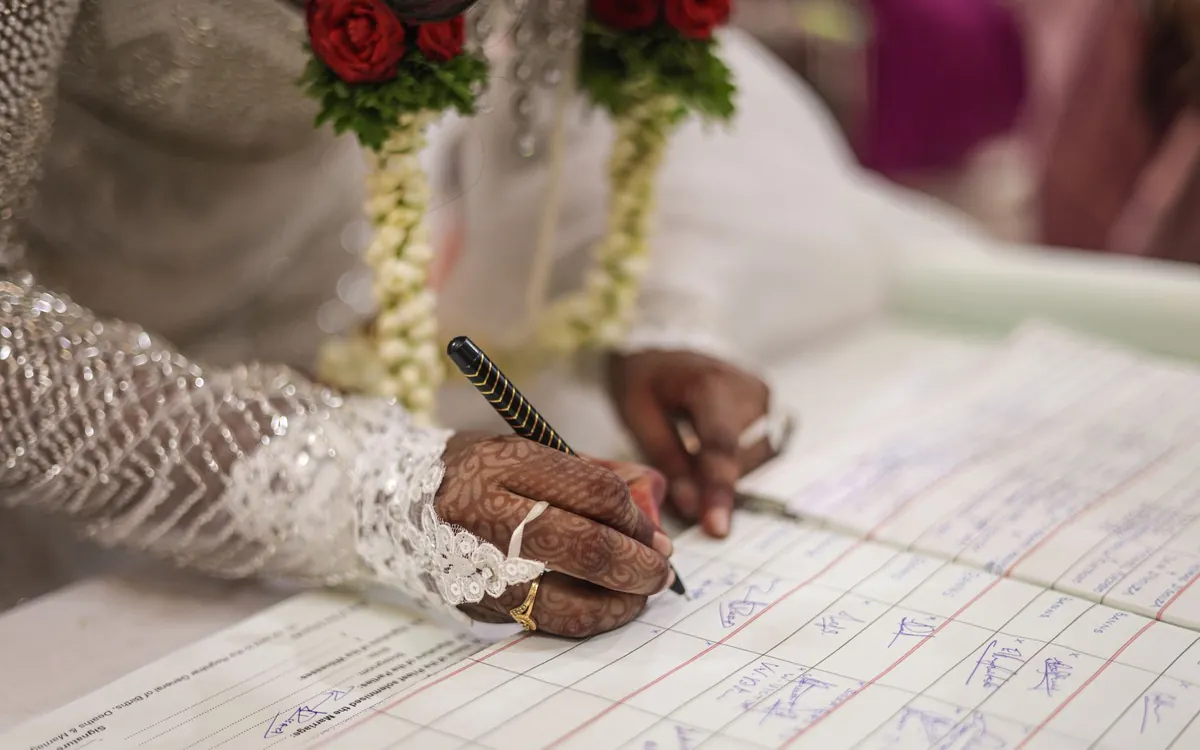
The legal position in India
Here is the general picture. The details depend on your circumstances, so treat this as background, not legal advice.
- No specific law for prenups. The Hindu Marriage Act, which governs most Hindu marriages including those in the Goswami and Dashnami community, does not provide for prenuptial agreements. Marriage under Hindu law is treated as a sacrament rather than a contract.
- Treated as a contract, with limits. A prenup is generally looked at under ordinary contract law. A contract that is considered against public policy, or that tries to override rights given by law, is unlikely to be upheld.
- Courts have discretion. Family courts decide matters such as maintenance, custody and property based on the law and the facts of each case. A prenup may be taken into account as a record of the couple's intentions, but it does not guarantee any outcome.
- Some rights cannot be signed away. Clauses that try to waive a spouse's right to maintenance, decide child custody in advance, or permit something unlawful are generally not enforceable. Children's welfare is always decided by the court at the time.
- Goa is different. Goa follows its own family law tradition, which has a default system of shared marital property and allows couples to choose a different property arrangement before marriage. If you are marrying in Goa, ask a local lawyer how this applies.
Because the law here is unsettled and can change through court decisions, a qualified family lawyer is the right person to advise on your specific situation.
What a prenup usually covers
Where couples do sign one, a prenup often deals with:
- Assets owned before marriage: property, savings, shares, jewellery or a stake in a family business.
- Assets acquired during marriage: how a jointly bought flat or joint investments will be treated.
- Gifts and inheritance: keeping ancestral property or inherited money separate.
- Debts: making clear that loans taken by one partner before marriage remain that person's responsibility.
- Day-to-day finances: who pays which household costs, and how joint accounts will run.
- Arrangements on separation: how property might be divided, within what the law allows.
A sensible prenup avoids anything that sounds like a dowry demand, a penalty, or control over the other person's career or personal choices. Dowry is illegal in India, and no agreement can make it acceptable. Our article on dowry-free marriage explains why simple, fair weddings are gaining ground.

Pros and cons to weigh
Possible benefits
- Clarity. Writing down who owns what can prevent confusion and disputes later, especially where family property is involved.
- Honest conversations. Preparing a prenup forces a couple to discuss money, debts and expectations openly before marriage.
- Protection for family businesses. Parents who have built a business may feel more comfortable if ownership is documented.
- Peace of mind in remarriage. People with children from a first marriage may want to secure their children's inheritance.
Possible drawbacks
- Uncertain enforceability. In most of India, you cannot be sure a court will follow it.
- Emotional strain. Raising the subject can hurt feelings or create suspicion between families, particularly in an arranged match.
- Cost and effort. Proper drafting needs a lawyer for each side, and full disclosure of assets.
- Social stigma. Some relatives may see it as a sign of mistrust or expecting failure.
Alternatives that offer similar clarity
If a full prenup feels too heavy, there are simpler steps that achieve some of the same goals:
- Clear property records. Keep sale deeds, gift deeds and inheritance documents in order, in the correct name.
- A will. Both partners can make a will, especially if there are children from an earlier marriage or specific family assets to protect.
- Nominations and joint ownership. Update nominees on bank accounts, insurance and investments after marriage, and decide consciously whose name goes on a new home.
- Registering the marriage. A registered marriage gives a clear legal record. Our guide to marriage registration in India explains the process.
- Open financial planning. Our guide to managing finances as a newly married couple covers joint and separate accounts, budgets and shared goals.

How to raise the topic respectfully
If you or your family feel a prenup is worth discussing, timing and tone matter. Bring it up early, well before wedding preparations are underway, not a week before the pheras. Explain the reason honestly, such as a family business or children from a first marriage, and make it clear it is about clarity, not mistrust. Suggest that both sides take independent legal advice, and be open to changes.
Above all, the best protection for any marriage is choosing a partner whose values match yours. On Goswami Matrimony you can take time to understand a person and their family before deciding. Browse brides and grooms from the community, or register your profile today.
Frequently asked questions
Are prenuptial agreements legal in India?
Signing a prenup is not illegal, but there is no specific law recognising prenups for Hindu marriages. Courts may consider one as evidence of the couple's intentions, but they are not bound to enforce it, so its effect is uncertain.
Can a prenup decide child custody in advance?
No. Child custody is decided by the court at the time of separation based on the child's welfare. Any clause trying to fix custody in advance is unlikely to be followed.
Is a prenup the same as a dowry agreement?
Not at all. Dowry is illegal in India, and any agreement involving dowry demands has no legal standing. A genuine prenup is about clarifying property and finances between the couple, not payments from one family to another.
Do we need a lawyer to make a prenup?
Yes, it is strongly advisable. Each partner should ideally have their own lawyer so that the agreement is fair, clearly drafted and signed with full understanding and free consent.
Are there alternatives to a prenup?
Yes. Many couples rely on clear property documents, wills, updated nominations and open financial planning. These steps provide much of the clarity a prenup offers without the same legal uncertainty.